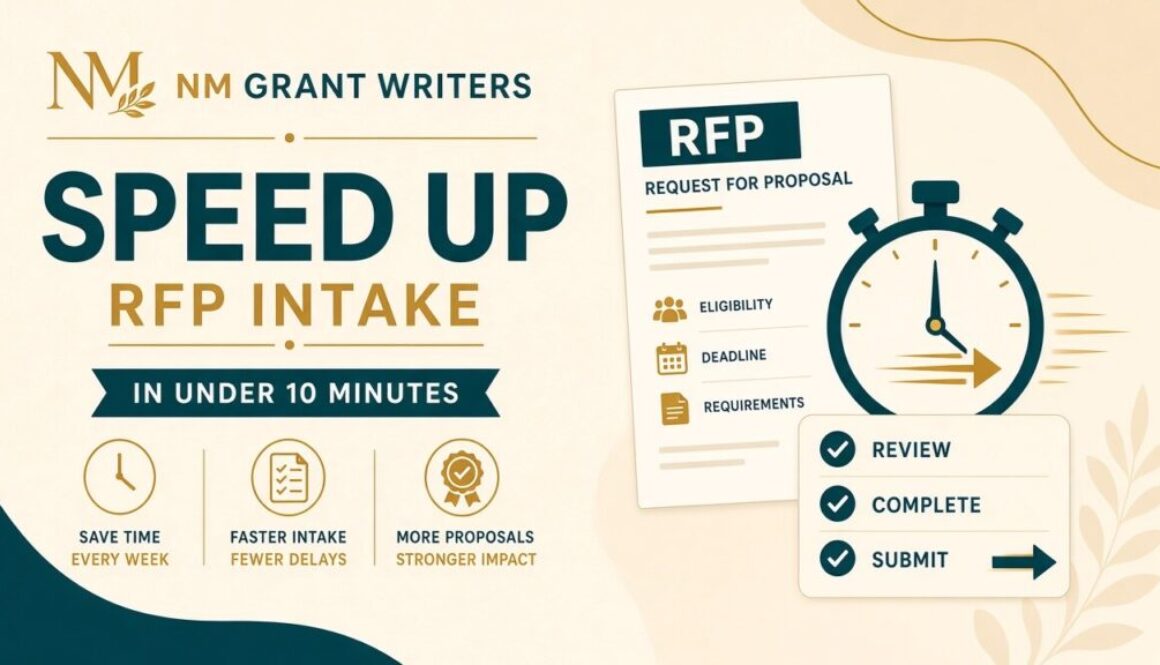
How to Speed Up RFP Intake in Under 10 Minutes
Every non-profit professional knows the familiar feeling of downloading a complex 60-page Request for Proposal (RFP) document and feeling immediately bogged down by dense legal terminology, strict formatting rules, and confusing submission guidelines. When grant deadlines are tight, spending several hours attempting to interpret basic application requirements severely delays your entire grant proposal process. Mastering efficient RFP grant writing begins with a systematic, rapid intake protocol that extracts essential details instantly without wasting valuable drafting time.
At NM Grant Writers LLC, founder Gwen Valentino has established a proven 10-minute RFP intake system that converts cumbersome funding announcements into clear, structured writing blueprints. Having contributed directly to $55M+ in grant funding secured across New Mexico, Gwen developed this protocol to ensure non-profit teams never spend valuable days drafting applications for grants they are ineligible to win or ill-equipped to manage.
Phase 1: The 2-Minute Eligibility Diagnosis
Before reading the introductory letter, organizational background requirements, or executive summary, jump straight to the eligibility criteria section. You must verify three mandatory compliance checkpoints immediately:
Tax and Entity Status: Does the funder explicitly require a 501(c)(3) determination letter, or are public schools, tribal entities, and fiscally sponsored projects eligible?
Geographic Eligibility: Does your target service population fall within the funder's designated funding boundary across New Mexico counties?
Matching Fund Commitments: Does the grant program demand a mandatory cash or in-kind match that your organization cannot commit within the grant timeline?
If your organization fails any single one of these criteria, stop reading. Discarding non-matching opportunities immediately protects your team's time for high-probability grant opportunities that truly align with your mission.
Phase 2: Extract Technical Submission Rules (3 Minutes)
Next, scan the document for hard technical boundaries. Record the precise submission deadline date, exact time zone, and online application portal link. Take careful note of document formatting restrictions, including maximum page limits, allowed font choices, line spacing, margin sizes, and mandatory file attachment naming conventions. Documenting these technical guidelines early in your RFP grant writing workflow prevents last-minute technical rejections caused by minor formatting oversights.
Phase 3: Map the Reviewer Evaluation Rubric (3 Minutes)
Locate the scoring rubric or reviewer evaluation guidelines. Evaluators grade grant applications according to specific point distributions assigned to each section. Identify where the highest point totals lie. For example, if the Project Need section accounts for 35 points while the Organizational History is worth only 10 points, you must allocate your drafting time and narrative depth accordingly to maximize your overall score.
Phase 4: Construct the Master Writing Skeleton (2 Minutes)
Copy the required proposal narrative subheadings directly from the RFP into your document editor. Using the funder's exact numbering scheme and heading phrasing guarantees that grant reviewers can easily cross-reference your answers against their scoring rubrics during review, ensuring no compliance element is overlooked.
By integrating this rapid 10-minute intake method into your ongoing grant proposal process, your non-profit will save valuable hours, eliminate confusion, and submit higher-quality applications with confidence.